 Consider backing our Kickstarter project and get this Cassini poster, Voyager or Curiosity (or all three) as large scale screen-printed posters.
The Top 20 Robotic Spacecraft in History
The poll is complete and the most popular robotic spacecraft in history have been selected. Thanks to the efforts by The Planetary Society. The top three missions selected here now represent the themes of our series of screen-printed posters celebrating the history of robotic space exploration. To support this effort please see our campaign page at Kickstarter.
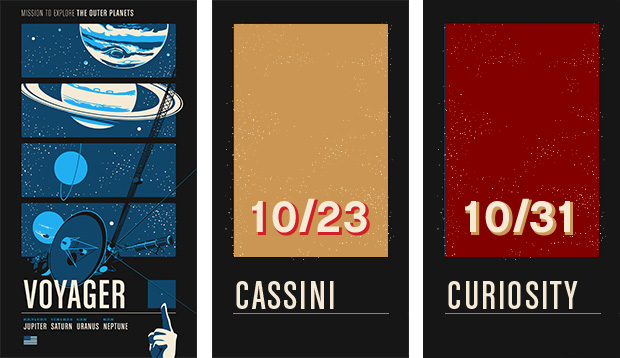
The Voyager Program As we expected the Voyager Program came into the top spot with 507 votes (18.5%). The poster for this design is already complete and available for viewing on the campaign page.
Cassini / Huygens Cassini takes poster #2 with 432 votes (15.7%), effectively eclipsing it’s sister probe Galileo. This design is expected to be completed on or before October 23rd.
Mars Science Lab (aka Curiosity) The newest member of the robotic Martian community of surface rovers, Curiosity arrived in 2012 and has stolen the thunder of the previous Mars Exploration Rovers with 340 votes (12.4%). This design is expected to be completed on or before October 31st.
As for the rest of the list, here is how things all panned out:
- The Mars Exploration Rovers 189 (6.9%)
- Sputnik (Earth) 169 (6.2%)
- The Viking Program (Mars) 146 (5.3%)
- New Horizons (Pluto) 136 (5.0%)
- Rosetta (comet) 123 (4.5%)
- Galileo (Jupiter) 121 (4.4%)
- Venera (Venus) 67 (2.4%)
- Pioneers 10 & 11 (Jupiter & Saturn) 66 (2.4%)
- The Mariner Program (Mercury, Venus & Mars) 47 (1.7%)
- Mars Reconnaissance Orbiter 40 (1.5%)
- Hayabusa (asteroid) 39 (1.4%)
- Mars Express39 (1.4%)
- Deep Impact / Epoxi (comet) 36 (1.3%)
- Stardust (comet) 26 (0.9%)
- Messenger (Mercury) 25 (0.9%)
- Maven (Mars) 22 (0.8%)
- Dawn (Vesta & Ceres) 22 (0.8%)
Should we reach our stretch goals, this would also make poster #4’s theme the Opportunity & Spirit rovers and poster #5’s surprising but historically honorable theme going to Sputnik.
A Martian Sunset by Curiosity
 Even though this sunset lacks the tiny disc of the sun, this image beats the previous sunset image for my hard-earned-cash.
Historic Robotic Spacecraft Poster Survey
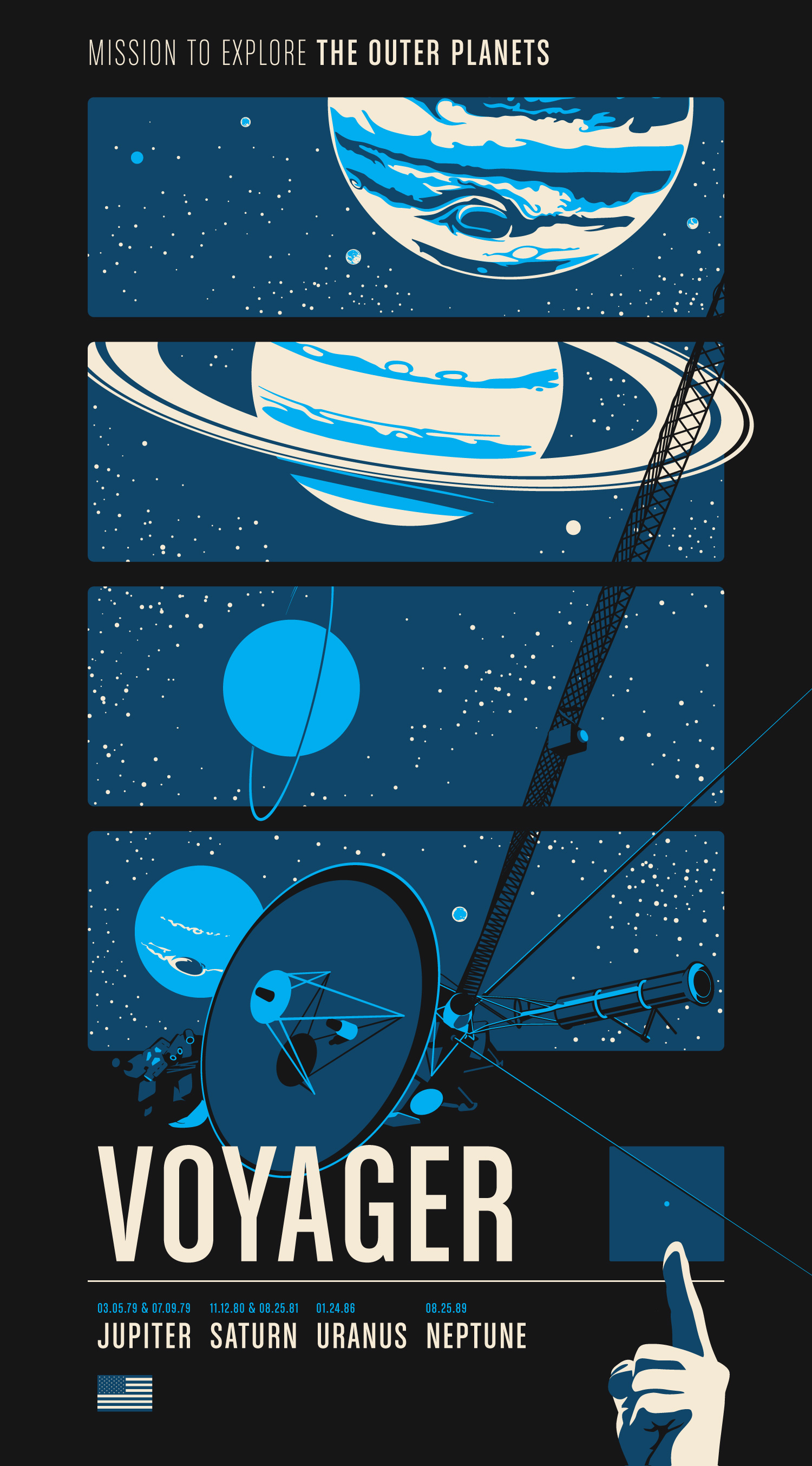 Our new Kickstarter project proposes the creation of three screen-printed posters celebrating the most popular and notable interplanetary robotic space missions in history. Going into this, we knew that poster #1 had to go to the hugely popular Voyager missions (shown above). However, we need your help selecting the themes of posters #2 and #3. So head over to The Planetary Society now to vote on your three favorite missions, but do it by the 19th to have it count for the poster selection. If this goes better than expected we could even wind up designing a fourth or fifth.
MOM is at Mars
 You know how your Mother will always take the most predictable pictures at the holidays? Well, the Mars Orbiter Mission has done exactly that with it’s recent global image of Mars and it turns out to actually be quite a rare image. Despite so many probes being active at Mars at once, most are too close to the planet to be able to capture a full disc image like this.

It is also the first interplanetary space mission for the Indian Space Research Organization and is really just a technology demonstrator for the group. This makes India only the fourth space agency to reach Mars and quite an accomplishment to do so successfully on it’s first try. To provide context for that statement, here is a list of missions to Mars and all the ones listed in bold (most spectacularly) failed to reach their goals. So Wanderingspace is happy to welcome another active player to the field of planetary exploration.
Malmer’s Model
 It is hard to imagine that this is a 3D model by Matthias Malmer. Not a series of 120 images released by the Rosetta team and stitched into a movie, but rendered from just 4 images. I processed this quick animated gif and looking at the individual frames, cannot detect the difference between the individual frames and still images taken by Rosetta.
Kickstarter Project Coming Oct 2
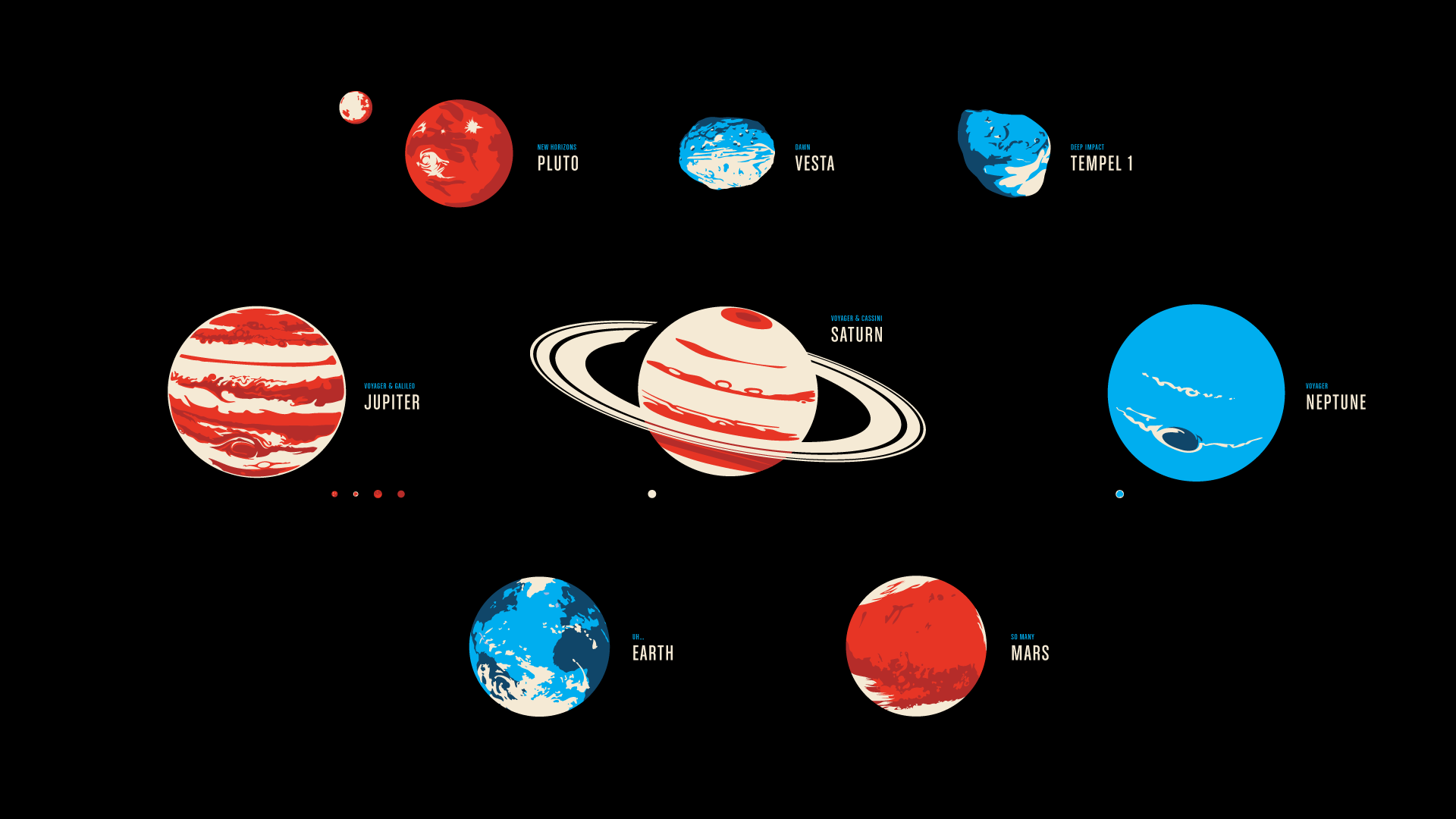 Our new Kickstarter campaign will be live in a few days. Above are a few of the celestial assets illustrated for the animation/video we are producing for the campaign page.
New Horizons Can See Pluto and Charon
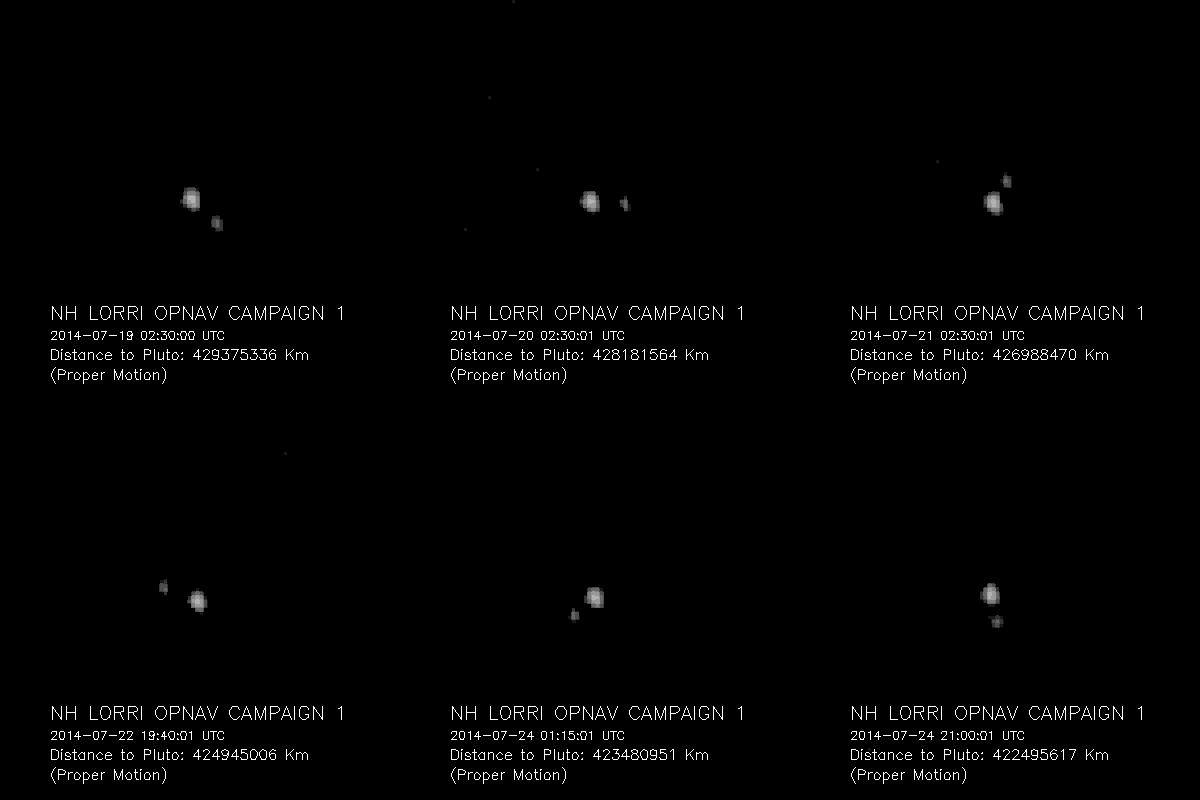 There is so little to see here, but to think that New Horizons arrives at this impossibly distant world next year is unreal. Other than some fairly minor bodies, after Pluto and Ceres are visited in 2015 — every major target of interest in the solar system that most of us grew up with will have been visited at least once by robotic spacecraft.
Crescent Triton
 And you thought the Voyager mission was over. A crescent Triton as seen by Voyager on August 25, 1989. Image by Gordan Ugarkovic.
Two Amazing Images of Comet 67P/CG
 A new imager turning out some impressive work on the Rosetta mission has popped up on flickr. These are not only gorgeous, but are the first color images I have seen of the comet thus far. Check out 2di7 & titanio44’s image feed and see not only more color images of the comet Churyumov-Gerasimenko, but also great work done at Mars and Saturn as well.
Image Notes: The original of the first image above can be seen here. What is posted here was cleaned up a bit by wanderingspace.net and is not intended for scientific use. We did the best to represent what is in the original, but telling the difference between what might have been boulders and what was image noise is hard to determine. Also, the jets were reprocessed and altered to appear smooth in this final version. More on the color below.
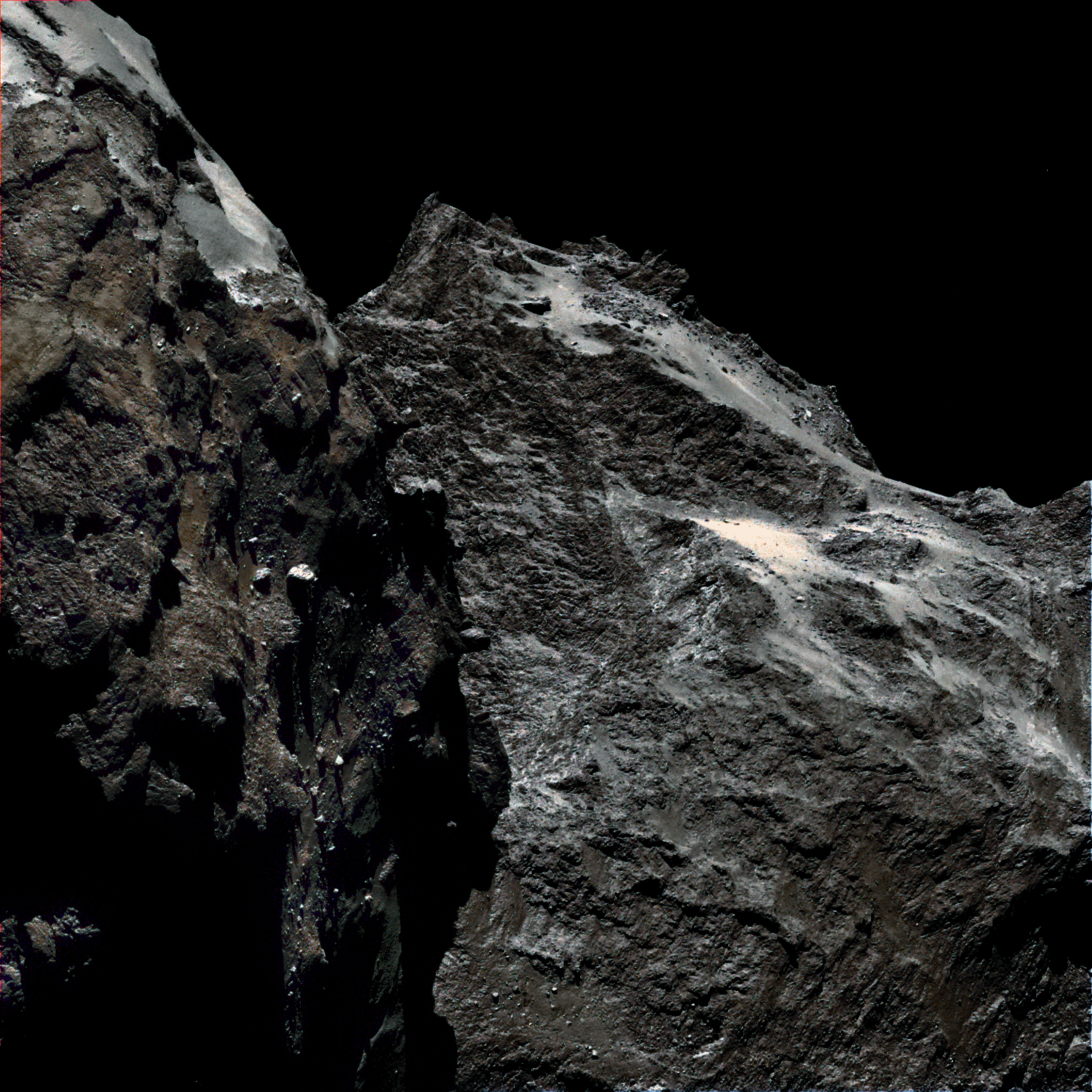
Image Notes: According to the imagers, there have been no filtered images released as of this date of Comet 67P/CG. Which means that the color above is artistic interpretation. Strikingly real looking, but still just a make-shift approach to consider what the color might be before any real data on color has been released by ESA.
Chop Shop’s Next Kickstarter Project
Honored to have @exploreplanets (#planetarysociety) crowd-source our next @kickstarter campaign. More to come 10/1 pic.twitter.com/MNeuXy00lQ
— wanderingspace.net (@wndrngspc) September 19, 2014
Also worth noting is our new Twitter feed now available twitter.com/wndrngspc.
A Different View
Whoa RT @Astro_Alex: I never imagined that flying to space would give me a different view of our entire galaxy. pic.twitter.com/6mzvOczsR3
— Emily Lakdawalla (@elakdawalla) September 19, 2014
Rosetta Selfie
 With the term “selfie” trending the way it is in popular culture… it was wise for the people at ESA to try a robotic interplanetary version. This image was shot by the Philae lander (still attached to Rosetta) staring down one of Rosetta’s solar panels looking at comet 67P/C-G in not-too-far-off distance.
Worth noting this similarly happened here at Mars in 2007.
Discover’s Best of Amateur Imagers
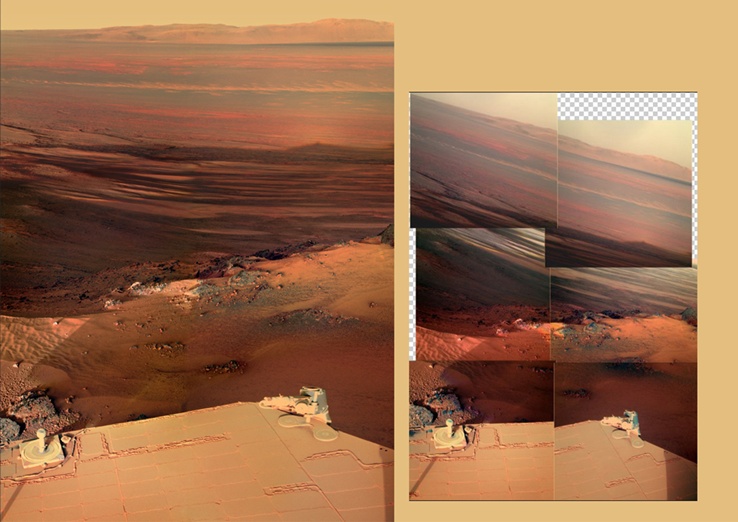 Discover online has an article today about some of the best in amateur space imaging. Many of which have been featured here on Wanderingspace before like Gordan Ugarkovic, Emily Lakdawalla and Bjorn Jonsson to name a few. The last item from Bill Dunford of Riding With Robots is an image that he actually suggested NASA point their HiRise cameras at that location. He suspected they might find something interesting there and they did —flash water movement and evidence of avalanches.
New Full Disc Images of Neptune
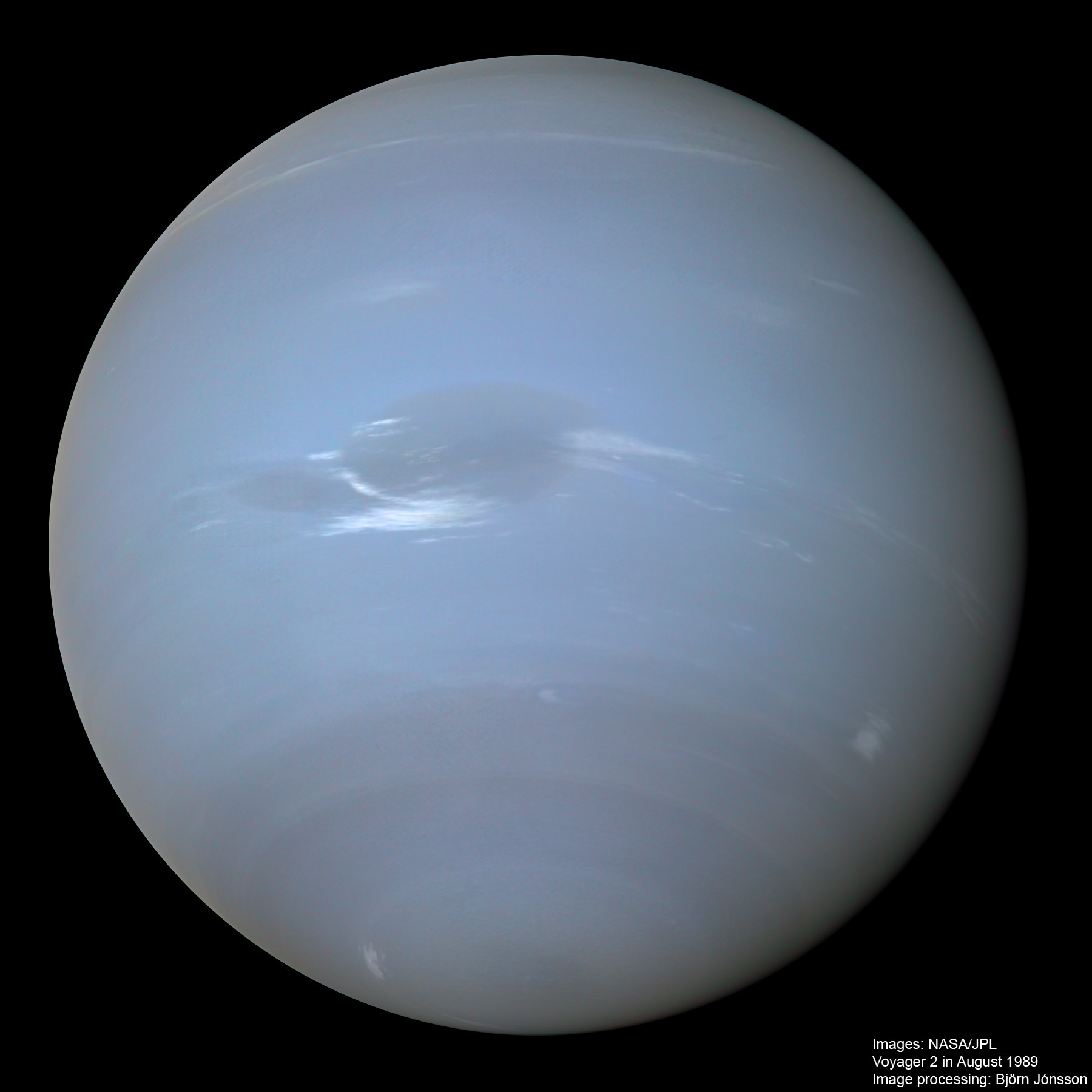
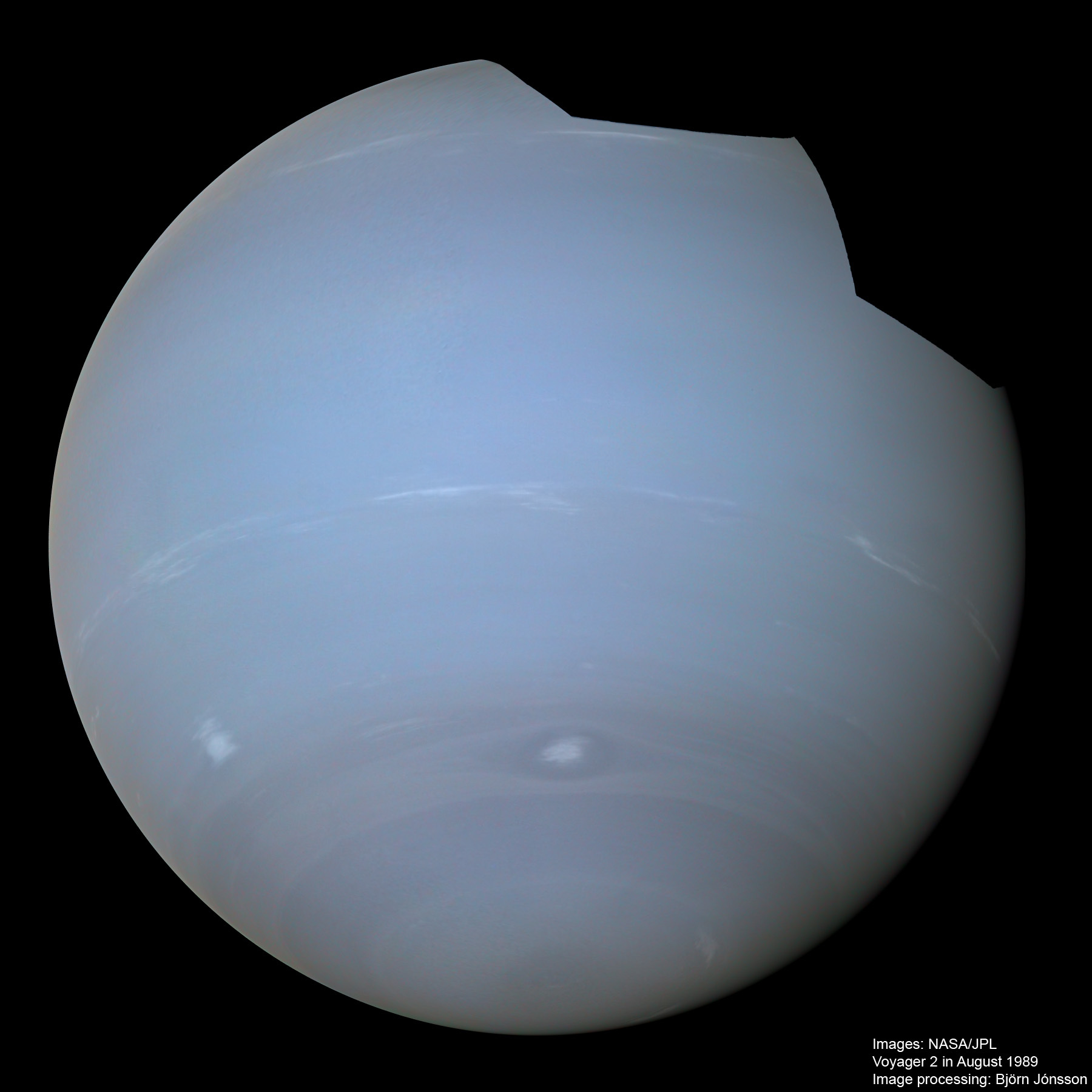
New global mosaic Voyager 2 images of Neptune by Björn Jónsson.
When It’s a Jet, It’s a Jet All the Way
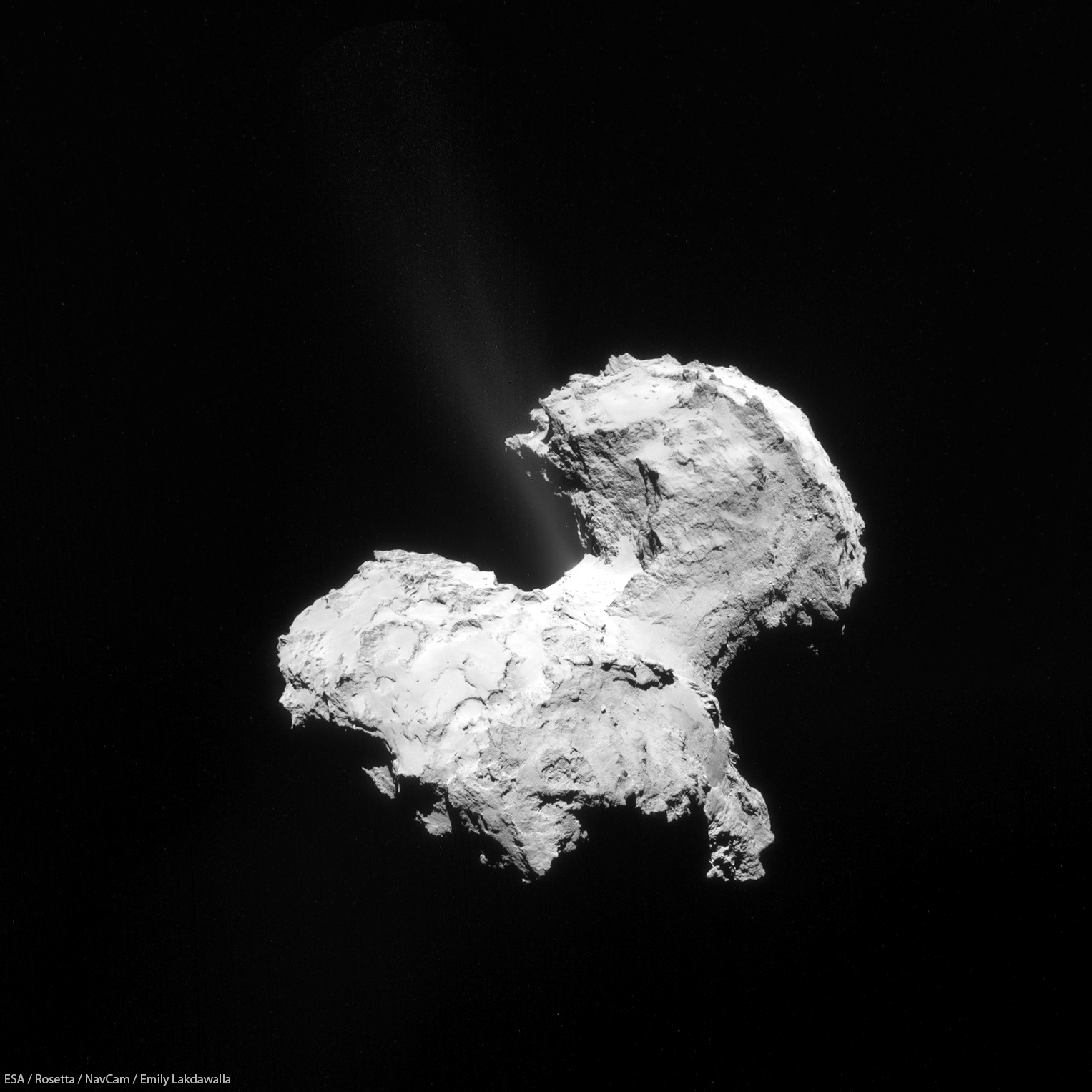 Comet Churyumov-Gerasimenko (aka CG-67P) is showing the early formation of it’s jets. Those jets are what cause the formation of the most distinguishing characteristic of any comet — it’s tail. The Rosetta spacecraft is currently in orbit about the comet and it is assumed that as the pair orbit closer to the sun, these jets will become much more active and should provide quite a show for us. The Rosetta team has also recently shared the potential landing sites for it’s Philae Lander in November shown here.
This image was brought to the world by Emily Lackdawalla’s Planetary Blog.
Saturnati XXX
 A fine, fine portrait of Saturn for #30! Created by Ian Regan. There is also an amazing “enhanced” version of the same image going around on Twitter.
Humannaires!
 Mike Mongo (of OBEY fame) is now with Icarus Interstellar whose goal is the first interstellar mission before the year 2100. Please consider crowd-funding Humannaires!, his astronaut instruction manual for pre-teens. It is time for humanity to leave the nest and they just might be the generation to do it!
Triton In Super High-Resolution

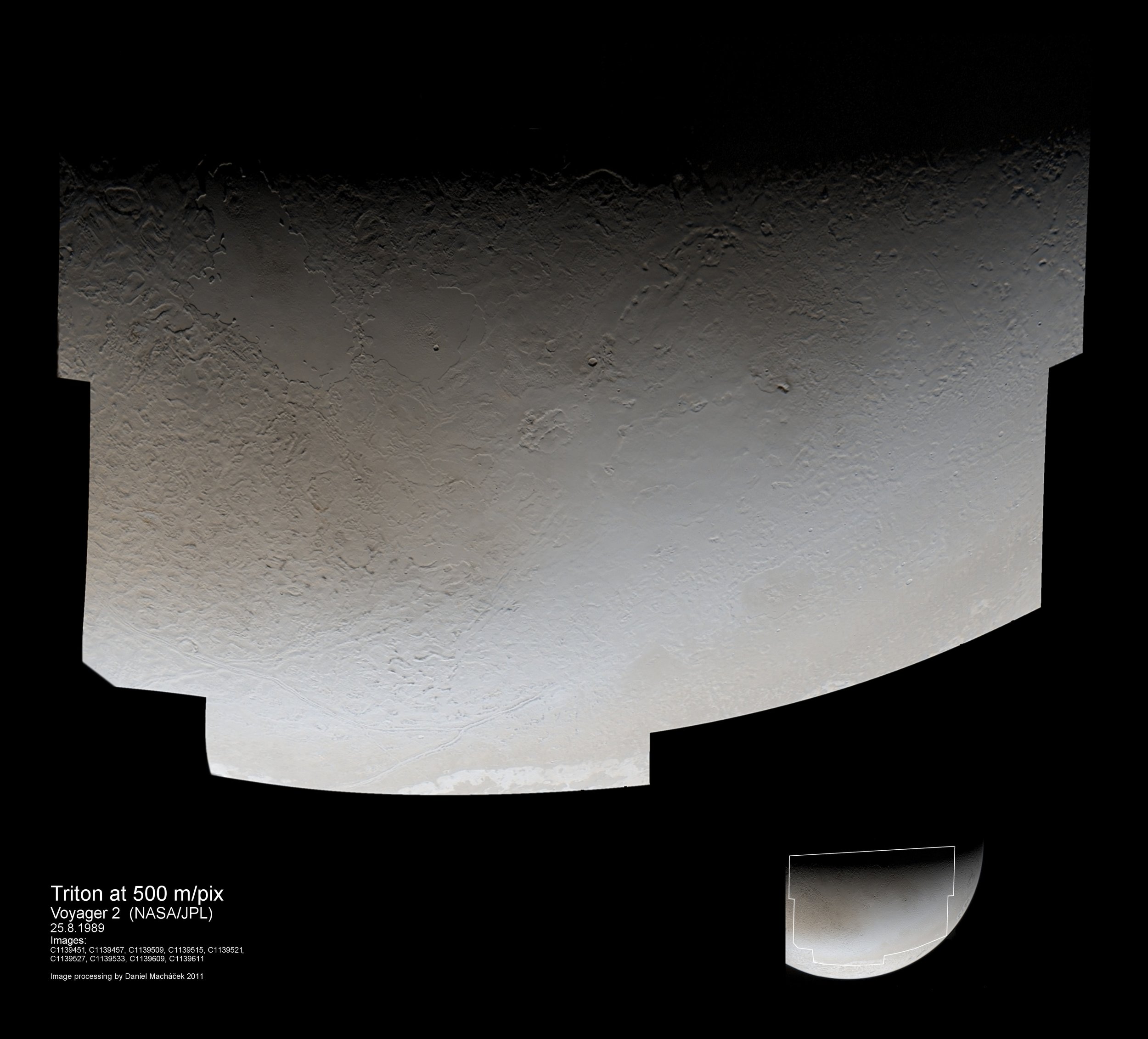
Amazing new looks at some pretty old data (Voyager at Neptune in 1989). Thanks to Machi at Unmanned Spaceflight.
Comet 67P/Churyumov-Gerasimenko
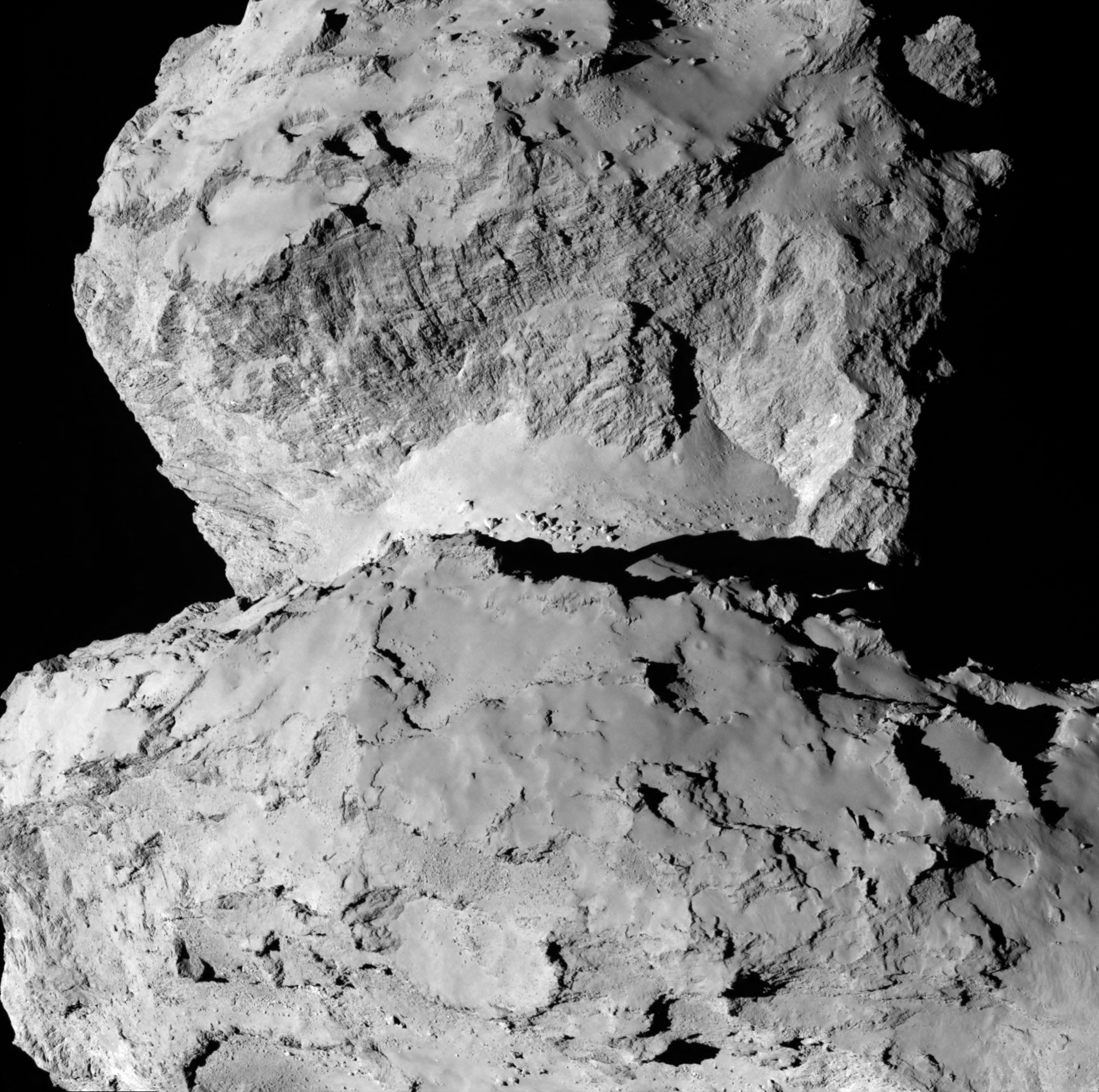 Dramatic view and the highest resolution of the comet so far filling the view. See also this version (if you have 3-D glasses handy).