With all the news recently of renewed manned moon missions and the “intention” to send astronauts eventually from there on to Mars, I was thinking of the time frames on these goals. In just proposing going back to the moon, NASA has suggested this goal might take 10 years. Interesting considering that in the 1960’s we announced that goal (absent nearly all the technology to actually do it) and we actually set foot on the moon in 9 years. How it is our technology is nearly 50 years more advanced and yet it will still somehow take us one additional year more to do something we had already done 6 times previous in the 1960’s is beyond me.
Looking past the Moon to Mars I'm guessing will take, optimistically, at least another 5 years beyond that. More realistically… allowing for accidents, budget delays, etc… a manned Mars mission may not take place for 20 years from now. I am 37 right now, which makes me 57 when someone first takes a step onto Martian soil. If at that point, around 2025, we drop off from planetary exploration like we did as a reaction to the Apollo program, well… essentially… I will likely have seen as far into the cosmos as man will have traveled in my lifetime. Unless the atmosphere for this kind of exploration changes considerably in the next 20 years (which could happen) it is hard to imagine that before I shuffle off this mortal coil, that NASA (or anybody) would be willing to tackle a manned mission to places as exotic as Jupiter or Saturn inside of an additional 20 years.
All of these goals listed above would also cost a considerable amount of cash. The budget for a Moon base for instance would likely eat up all resources alloted to NASA and then moving on to Mars anytime thereafter would surely dwarf the kinds of numbers we saw for Apollo – even considering for inflation. I know some books have been written by very reliable people that suggest a manned mission to Mars could be done for 1/10 the cost that NASA tosses about regularly, but everyone knows that government agencies could not (safely) cut corners on these missions. Many would also be unwilling to politically risk the personal responsibility of some colossal failure on such a high profile event in human history. A manned mission to Mars will not be done on the cheap… trust me… there will be no New Horizons economical version on a manned mission to any place other than Starbucks Coffee.
So, considering the available band-width available to the human exploration of space… how do we get to become a space faring species like we see in popular science fiction? How might humanity ever muster up enough resources and dedication to potentially populate the Moon, populate Mars, build cities in Earth orbit, explore the moons of Jupiter and send teams of inquisitive scientists to study the lakes of Titan? The only way I could see any of that happening in such a way that it becomes a part of the everyday human experience, would be for human kind to figure out a way to do away with war.
To even approach some of the more reasonable science fiction visions of humanity’s future would cost not only a whole lot, but would actually require a lion’s share of the full available budget as national defense currently does. It is not hard to imagine that a real human reach beyond terra-fir-ma would actually be more expensive than current or even reagan-era military spending was. So much of human effort, technology and riches are either spent using or developing the machines of war in order to insure each nation’s own national security or ambitions. If you examine much else of what we human’s spend our time and resources on, you will discover that pretty much the only one of those which could theoretically be nullified is the cost of war. No matter the progress of technology, we human’s will still need to pay for social programs, health care, infrastructure… the list goes on. The only major cost of any nation – that is not directly related to some kind of progress or maintenance which is the natural result of actually having a nation or civilization to uphold – is the cost of making or protecting one’s self from an act of war.
So until we figure out how to avoid these conflicts, as well as come up with a system which can guarantee all nations protection from any rogue powers bent on invasion, we will have to keep our larger dreams of a space-faring society to tiny, little, very long and time-consuming steps. The human race has to figure out some way to stop spending a majority of its energy making war and and divert that energy into the greater goals of all sciences. Only then can the fantastic vision of the future that we have had for generations be within the reach of a single lifetime.

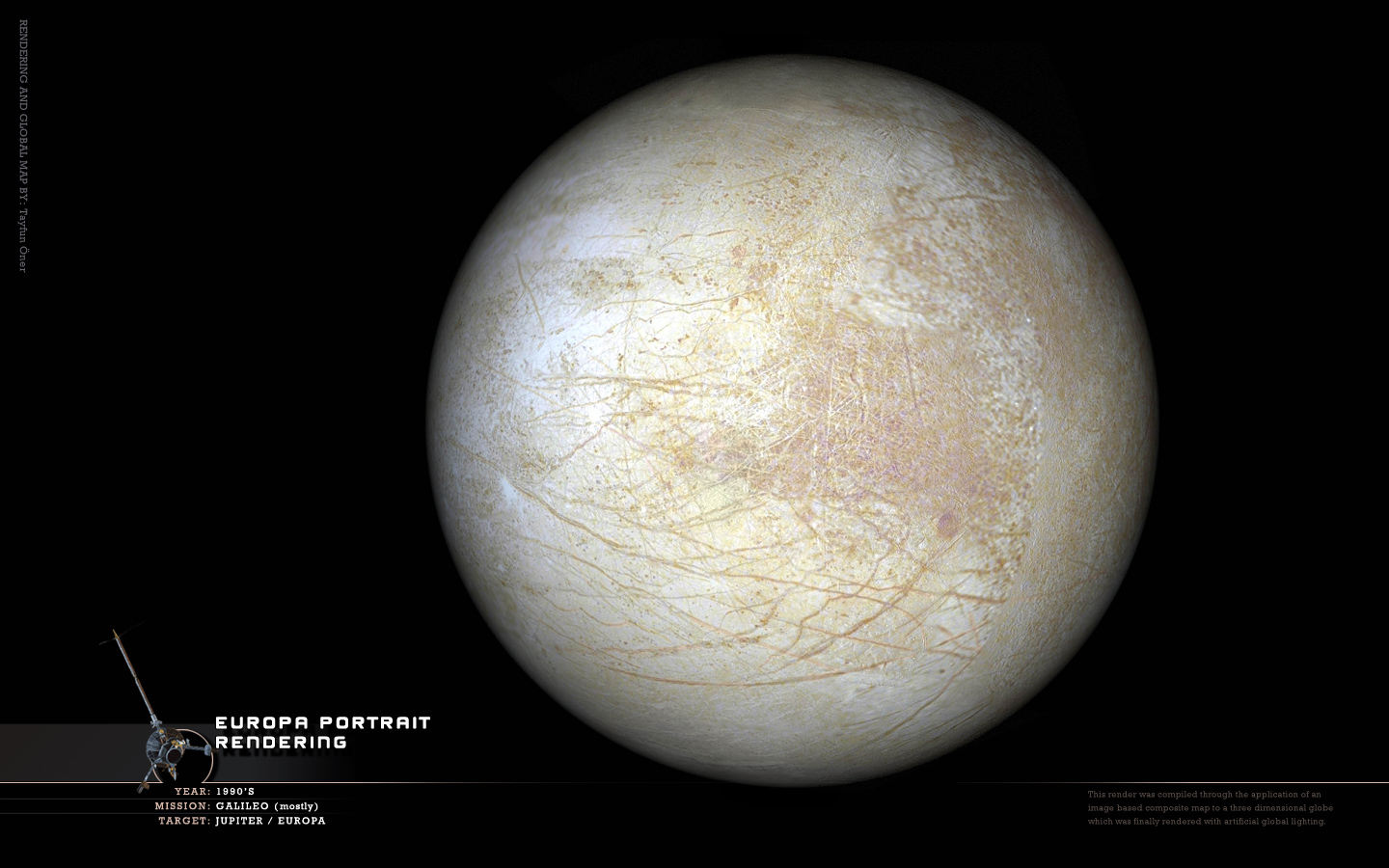
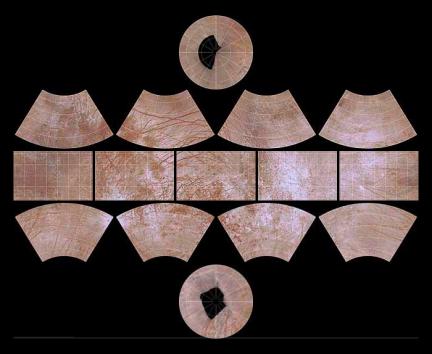 I usually prefer straight photography for the puposes of this site, but this is one of the most impressive renders I have ever seen of any body in the solar system. Seeing as how data sets for full global images of Europa are flawed at best… this render does the job most impressively. The full hi-res set of Europa maps by Tayfun can be found


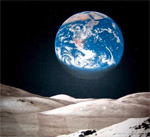 Seeing the size of Earth as it really appears from the surface of the moon reminds me of this wallpaper that I grew up with in my room as a child. I always assumed it was an actual image, but in reality the Earth appears about 1/20 the size and Earth would never phase in shadow from north to south under any circumstance! (I missed that obvious flaw as pointed out by Paul Neave). I beleive they still sell this wallpaper as I still see it around occasionally at stores and other public spaces (no pun). In addition to this image, you also see the Earth from moon shots taken while in- moon-orbit which also gives the Earth a far larger appearance… but I suspect that some good zoom lenses were likely utilized to get those looks as well.
 I’m beginning to feel like this isn’t my blog anymore… I keep finding images processed by Gordan Ugarkovic to be among the very best out there. This is definitely the best color image I have seen of details in Saturn’s cloud tops. If you haven’t perused his flickr account, I’d avise you to do so. Go there to see the hires of this image and many others. It is a one-stop-shop for anyone longing to see more color from the Cassini mission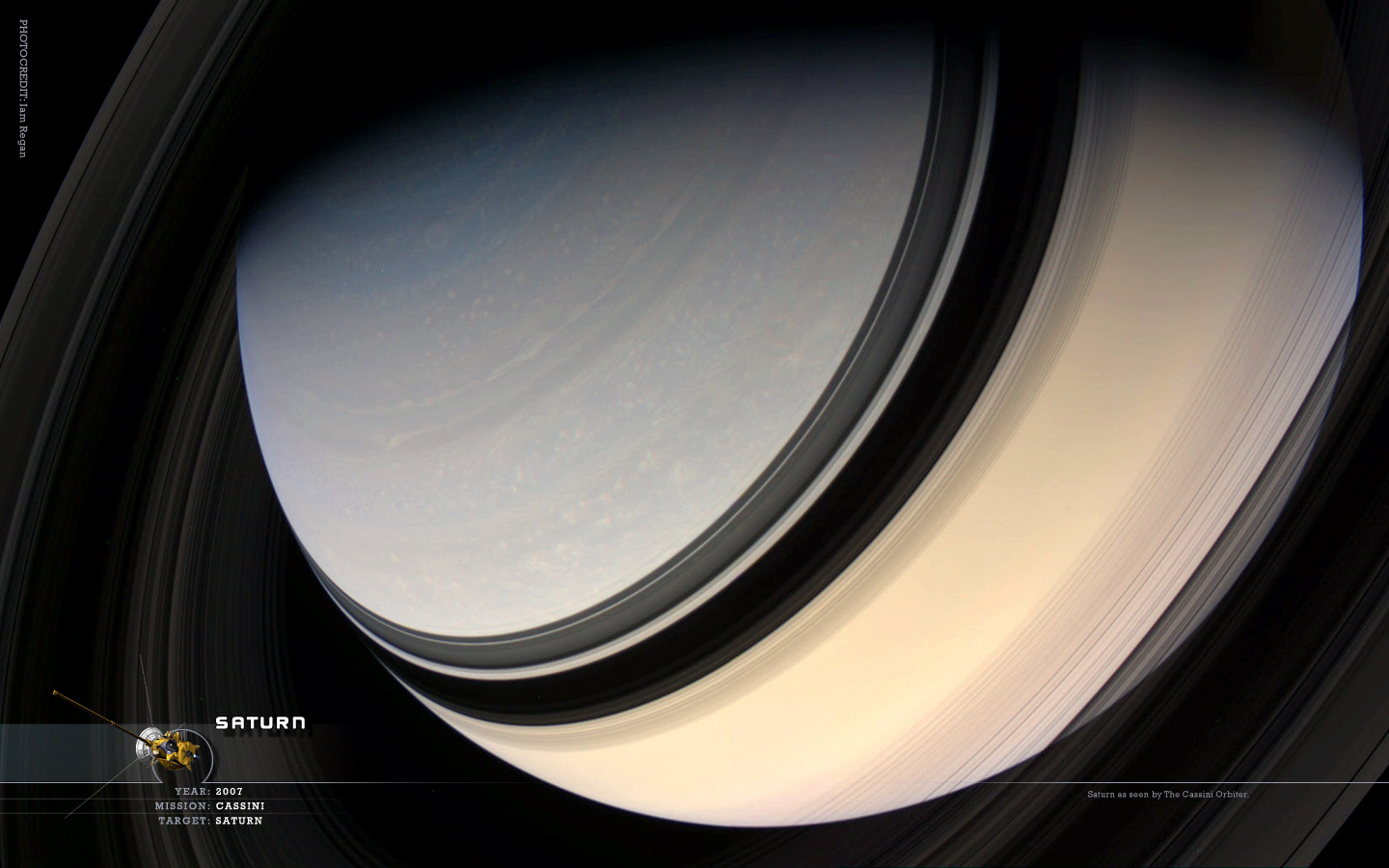


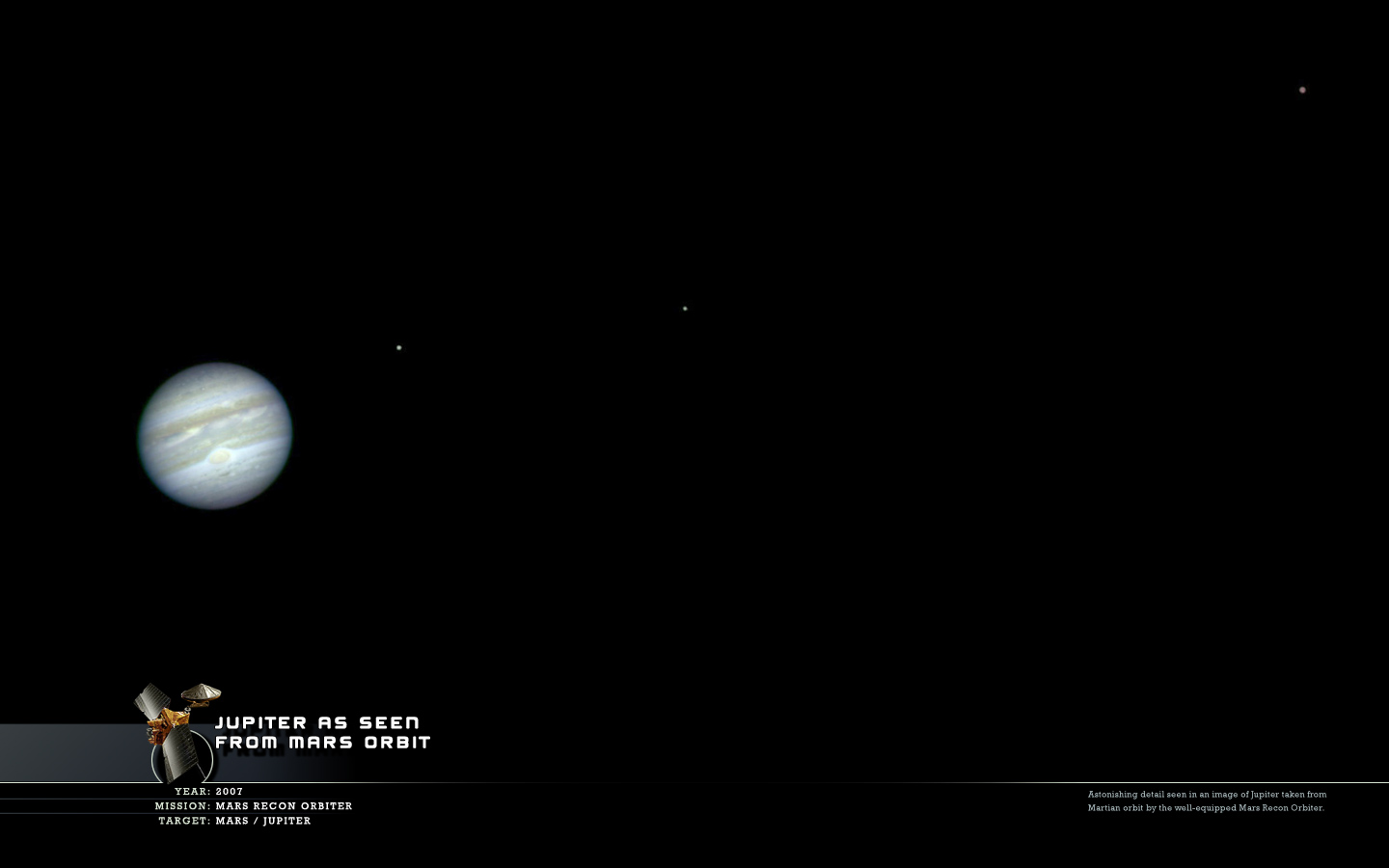
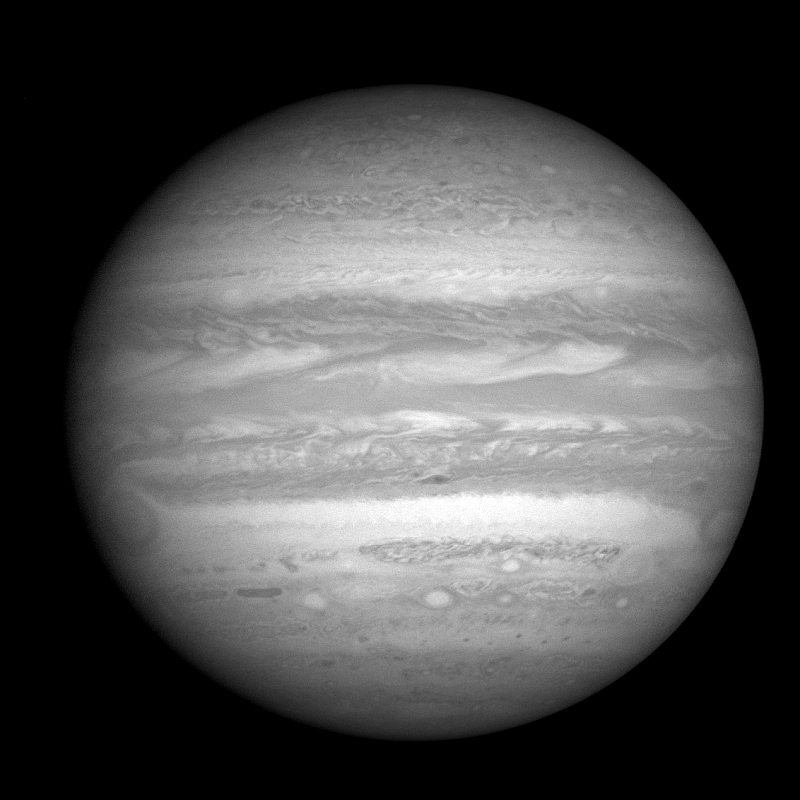
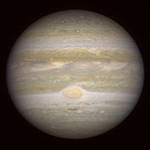 This is a great way to truly understand the capabilities of the Mars Reconnaissance Orbiter. This image of Jupiter is taken from Martian orbit which is 357 million miles away. It is comparable to the what the New Horizons is seeing as it actually approaches Jupiter, which is currently 38 million miles away. So if you were wondering how MRO can get those incredibly detailed images of rovers and landers on the surface from orbit… now you can scratch your head and wonder how it can see Jupiter as good as a probe that is actually approaching a flyby in a few weeks.