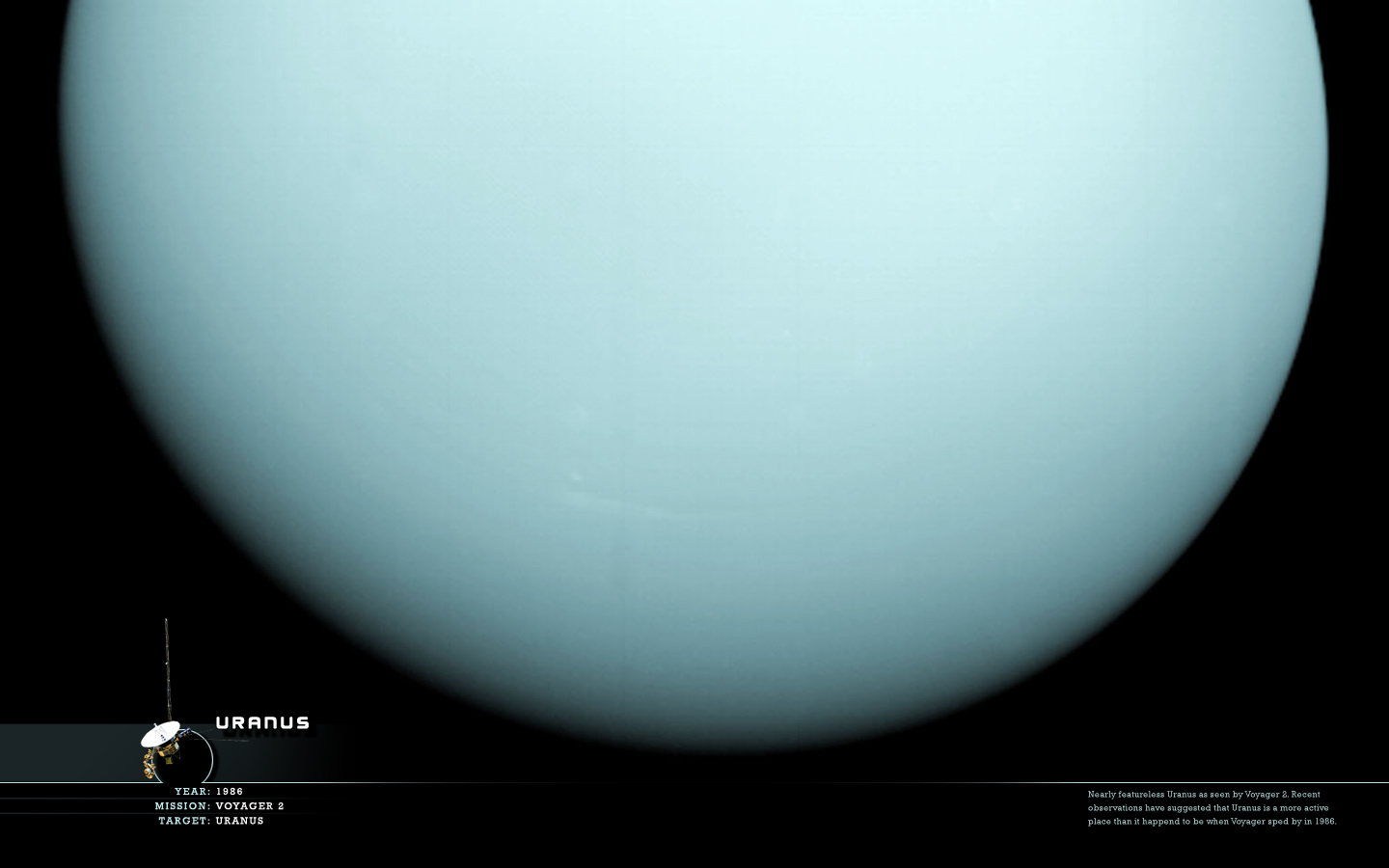
 Second only to Mercury, Uranus tends to get the “boring” award from most due to its lack of almost any kind of cloud details. Among its five moons, there also isn’t really that much going on beyond what one might expect from such medium to small sized moons (with the possible exception of Miranda). However, there are a few things about Uranus that strike interest in it like the ring system, its axis is turned to about 98 degrees and more recently Hubble observations suggest that Uranus does have periodic cloud details not seen when Voyager flew past. As fate would have it, Uranus was in an unusually quiet mood in 1986.
Wallpaper: Saturn Portrait
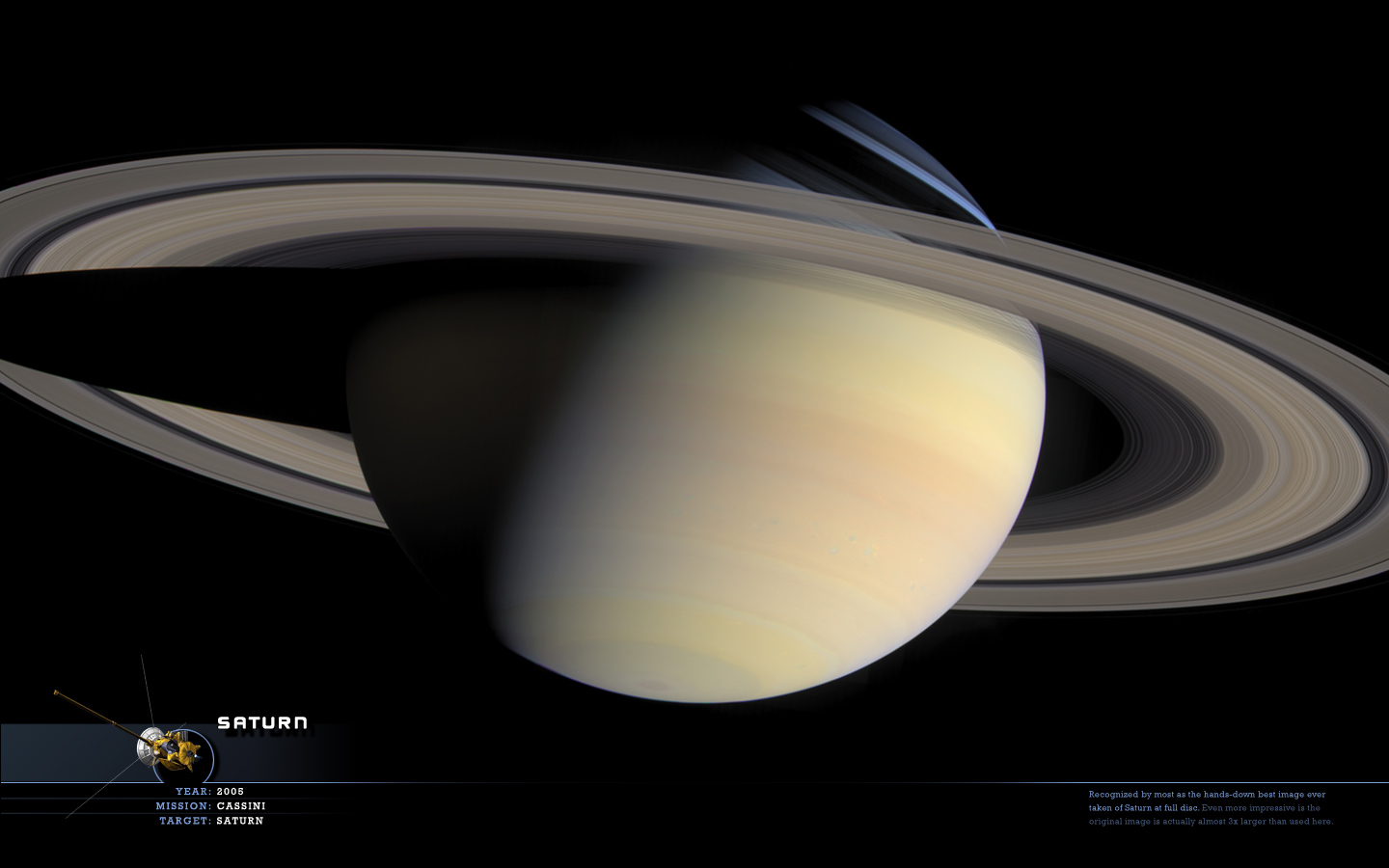 Usually the favorite of most due to its fabulous ring system which easily makes Saturn the most picturesque bodies in the solar system. It also has an extensive system of moons which makes Saturn, like Jupiter, almost a mini system within our Solar System. One of its moons, Titan, is more of a planet than some planets are in that it has a thick atmosphere, is large in size, has weather and recent radar images suggest an extensive system of methane/ethane rivers and lakes.
Wallpaper: Jupiter Portrait
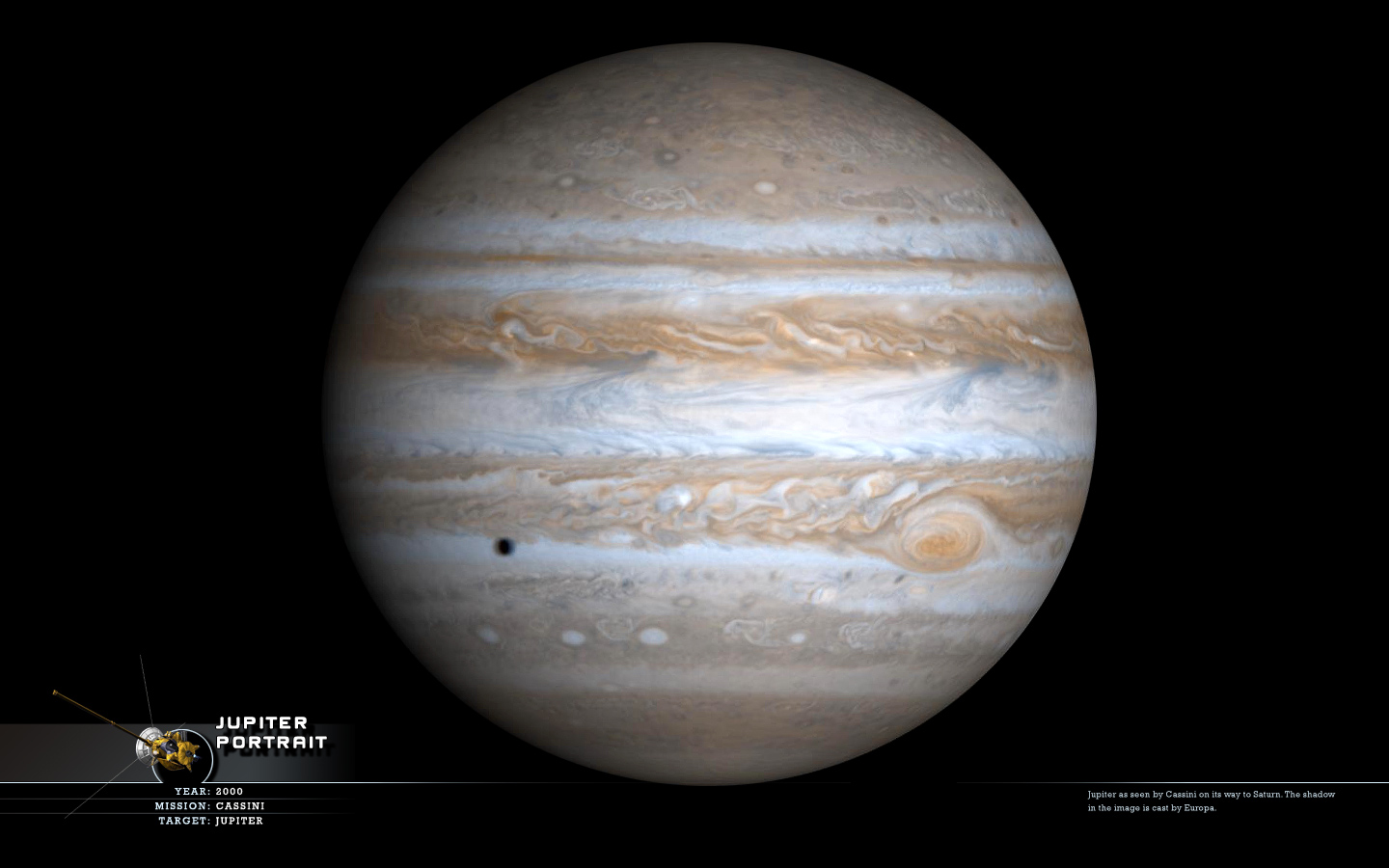 Jupiter is a mini system within our solar system. Had it become considerably more massive during the formation of the solar system, it may have ignited and given us a binary star system. It is quite large in comparison to the other planets and its mass is 2.5 greater than the combined mass of all the other planets in our system. The best feature of all is Jupiter’s system of four large moons, Io, Europa, Ganymede and Callisto. These moons are in their own right, more fascinating than many planets happen to be. For example, one of its moons (Europa) has become what many scientists are calling our Solar System’s “most likely place to currently harbor life”, other than Earth.
Wallpaper: Io Against Jupiter
 Io was observed against Jupiter here in this partial family portrait. Its close proximity to Jupiter is what tears the tiny moon apart internally and causes the large amount volcanism discovered by Voyager and monitored by Galileo. Oddly enough, this image was taken by Cassini on its way to Saturn during its gravity assist pass through the Jupiter system.
Wallpaper: Mars Portrait
 Mars is historically the most popular planet in our system. It has been the subject of many science-fiction stories as well as legitimate scientific investigation in the search for life outside of our own home. Recent missions to Mars have all but confirmed the idea that Mars was at one time a wet Earthlike place, covered rivers, seas and even oceans. Where all that water has gone is the subject of great interest and many have not given up the idea that we may one day still find some kind of life there if not the remains of life that had at one time thrived on the surface.The below wallpaper was the previous “portrait” image of Mars, but I have decided that the new Rosetta image of Mars captured during its gravity assist in 2007 is a better full globe image of the red planet. Notice the color variation… which is true? Well, the newer one from 2007 looks closer to Hubble views as seen from Earth orbit and unless they are manipulating colors from Hubble it would lead me to think that the Rosetta image is more honest.
